
On April 18, 2026, the Irish government will release the full 1926 Census of Population online for the first time. Conducted by the Irish Free State, it will provide a detailed record of nearly three million people and households, offering a rare glimpse into the workforce, industries, and employment patterns of the early State.
While historians and genealogists are naturally excited, the census also provides an opportunity to examine how work has evolved from local, geographically bound jobs to a modern, globally connected workforce.
Employment in 1926: Local and Sector-Bound
The 1926 Census captured not only names and addresses but also occupations, employer types, and employment status. The records will reveal a workforce largely tied to local communities and specific industries. Jobs were fixed geographically, career mobility was limited, and cross-border work was rare.
Comparing these historical patterns with today’s workforce highlights how much employment has changed. Modern workforces are increasingly remote and distributed, spanning multiple locations and time zones. Hiring talent internationally has become a normal part of business growth rather than a rare expansion strategy.
Why This Matters
Beyond historical curiosity, the 100-year-old information will provide researchers with insight into long-term workforce trends such as:
- Which sectors dominated employment in 1926
- How occupations and roles have disappeared or evolved
- Shifts in mobility, gender participation, and industry distribution
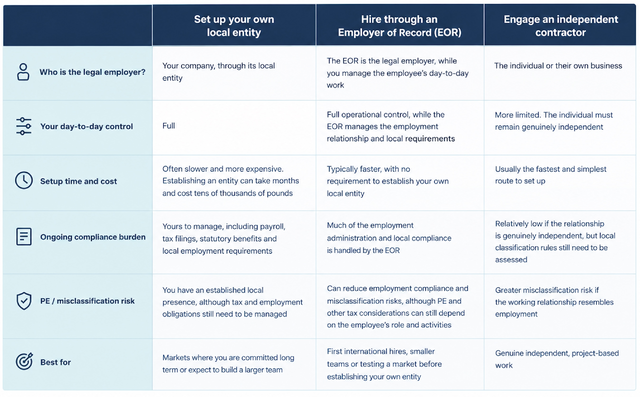
The data to come also offers context for modern employment practices. In today’s world, an Employer of Record in Ireland (EOR in Ireland) enables companies to navigate cross-border hiring challenges, comply with local labor laws, and support a distributed workforce - a far cry from the locally rooted employment of a century ago.
Understanding the Evolution of Work
The release is a historical milestone, but it will also serve as a lens for understanding how work has evolved over the past century. From local jobs tied to specific towns and industries to borderless, flexible employment models, the shift underscores how hiring practices, workforce mobility, and compliance frameworks have transformed.
For businesses exploring international hiring in Ireland, understanding this historical context offers a perspective on why modern solutions like EOR Ireland are essential for efficiently and compliantly connecting with global talent.
For more information about the release of the census, see the Central Statistics Office of Ireland.
If you’re ready to get started in the Emerald Isle, find out how we can help you expand in Ireland here.