Someone hands in their notice and suddenly the pressure is on. There is work to cover, knowledge to replace, and a team wondering who is going to step into the gap. The temptation is to throw money at the person who is leaving or rush out to find someone who looks capable of filling their shoes.
But that can create its own problems.
The trouble with throwing money at the problem
Sometimes a counteroffer works, but if you suddenly decide someone is worth more when they resign, it's worth asking whether they felt undervalued in the first place. A pay rise might keep someone around for a little longer, but it doesn't necessarily change the reasons they wanted to leave.
And if they have already made the decision to go, there is a risk you are simply delaying the inevitable. You could spend months trying to retain someone who has mentally moved on, only to have the same conversation again further down the line. Meanwhile, the time and attention spent trying to keep them could have gone into finding someone new who is truly right for the role.
Take a step back before you rush to hire
Rather than reacting to a resignation by rushing straight into recruitment, take a step back and think about what you actually need next. Has the role changed? Are there skills you now need that weren't part of the original job description? And are you limiting your search by only looking at candidates who happen to live within commuting distance?
Widening the search with international hiring
International hiring can open up a much wider talent pool, particularly when the skills you need are difficult to find locally. Instead of piecing together a replacement from whoever happens to be available, you can define the role around what the business needs and look for the right person, wherever they are based.
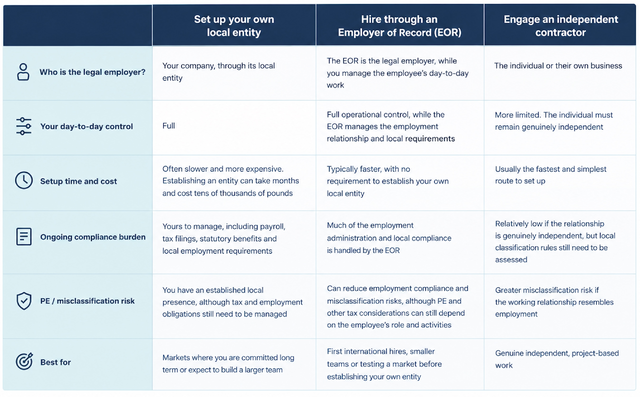
Of course, hiring internationally brings its own considerations. Employment law, payroll, tax, benefits, and local requirements all need to be handled correctly. For businesses unfamiliar with international employment, these responsibilities can make the process seem more complicated than it needs to be. A global Employer of Record (EOR) can help remove some of those barriers, allowing a business to employ someone in another country without first establishing its own entity there.
Don't create a role that tries to do everything
The real danger is creating a role that tries to do too much: taking bits of the old job, adding whatever skills seem urgent, rushing the recruitment process and hoping it all comes together. Six months later, you could find yourself dealing with a much bigger problem than the resignation you started with.
The key is to use a departure as an opportunity to reassess what the business needs, rather than simply trying to recreate the role as it was before.
Thinking about widening your next search beyond your usual talent pool? Get in touch to find out how Agility EOR can help you hire internationally, without the complexity.