Germany's skills shortages remain concentrated in construction and the skilled trades, creating recruitment challenges for employers even as pressure eases in other parts of the labor market.
The country's Federal Employment Agency (Bundesagentur für Arbeit) identified 157 occupational categories experiencing skills shortages in its latest annual analysis, published in September 2026 and covering 2025. This was down from 163 in 2024 and 183 in 2023, but the overall reduction masks persistent difficulties in specific occupations.
For businesses looking to recruit in Germany, the picture is more complex than the headline figures suggest. While some areas of the labor market are becoming less constrained, finding suitably skilled people for technical and trade-based roles remains a significant challenge.
Why are Germany's skilled trades still under pressure?
The Federal Employment Agency's analysis highlights ongoing shortages across construction and finishing, plumbing, heating and air-conditioning, electrical work and mechatronics. Just under half of the occupations nationally classified as experiencing skills shortages at skilled-worker level are in the skilled trades.
Plumbing, sanitation, heating and air-conditioning roles show the scale of the challenge. In 2025, the agency's labor-market data show approximately 1.1 registered job seekers for every registered vacancy at skilled-worker level. The figures do not show whether those job seekers have the qualifications, experience or specialist skills the roles require.
The contrast with software development is striking. The agency no longer classifies software development as a shortage occupation, demonstrating how recruitment conditions can differ between sectors and change over time.
Employers need to focus on the specific skills they require and assess how easily these can be sourced locally, rather than relying on broad assumptions about Germany's labor market.
Recruitment can take months, not weeks
The time it takes to fill a vacancy is another clear indication of the pressure facing employers.
According to the Federal Employment Agency's analysis of the skilled trades in September 2026, vacancies in the skilled trades took an average of 242 days to fill in 2025. Across all occupations, the average was 167 days.
A lengthy recruitment process has consequences well beyond the HR department. When essential roles remain unfilled, businesses can struggle to manage workloads, meet project deadlines and respond to new opportunities. For companies working on construction or infrastructure projects, recruitment delays can create significant operational pressure.
Allowing for longer recruitment lead times is particularly important when projects depend on specialist qualifications or experience that may be difficult to find locally.
Could infrastructure investment increase demand for skilled workers?
Germany's €500 billion Special Fund for Infrastructure and Climate Neutrality is a 12-year programme supporting infrastructure modernisation and climate-neutrality objectives. Its scope includes transport infrastructure, digitalisation and investment by Germany's federal states.
As this investment moves into project delivery, businesses in construction, engineering and related services will need to consider whether they can access the workforce required to meet demand.
The funding will not automatically create greater recruitment pressure in every trade. However, businesses planning to tender for contracts, expand operations or take on additional work should factor workforce availability into their decisions, particularly where projects depend on skills already in short supply.
Planning ahead: using an Employer of Record in Germany
Germany's latest skills-shortage figures show that improving conditions across parts of the labor market do not necessarily mean recruitment is becoming easier for every employer. The skilled trades remain a particular pressure point, with vacancies taking considerably longer to fill than the average across all occupations.
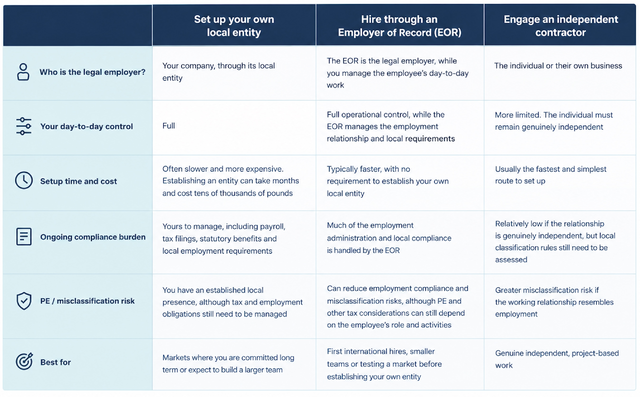
For businesses in construction, engineering and related sectors, international recruitment may offer another way to access the skills they need. An Employer of Record in Germany can help businesses employ international talent without setting up their own local entity, although labor leasing is restricted for certain manual construction roles under German law.
Find out how Agility EOR can guide your business through the requirements for employing international talent in Germany.